In the realm of digital marketing, trends come and go, but one channel has consistently demonstrated its value for over two decades: email marketing. Despite the rise of social media, influencer marketing, and AI-driven advertisements, email remains one of the most effective tools for nurturing leads, retaining customers, and generating measurable return on investment (ROI).
According to a report by Campaign Monitor, email marketing produces an average return of $44 for every $1 spent—a remarkable return on investment. However, the success of these campaigns hinges on execution. A poorly designed email can end up in spam folders or be ignored by recipients, while a strategic and personalized approach can foster lasting relationships and drive consistent revenue.
In this article, we’ll outline the best practices for conducting an email marketing campaign, covering everything from planning and content creation to automation and analytics. Whether you’re a startup founder, a small business owner, or a marketing manager, these steps will help you create email campaigns that truly work.
Why Email Marketing Still Matters in 2025
Many skeptics argue that social media has replaced email. But statistics prove otherwise:
- 4.6 billion people worldwide use email daily, according to Statista.
- Email open rates remain strong, with average rates of 21–25%, far outperforming organic reach on social media.
- Unlike social platforms, where algorithms limit your visibility, email goes directly to your subscribers’ inboxes.
Simply put, email is one of the only marketing channels you truly own. Your subscriber list is an asset that won’t vanish overnight if an algorithm changes.
Step 1: Define Your Goal and Target Audience
The first step in any email campaign is clarity. What do you want to achieve? Common goals include:
- Driving website traffic
- Increasing sales or bookings
- Nurturing leads through a funnel
- Announcing a product launch
- Building community engagement
Once you define your goal, identify your audience. Use buyer personas (demographics, interests, behaviors) to craft content that resonates.
👉 Tip: Tools like HubSpot’s Make My Persona can help create detailed audience profiles.
Step 2: Build and Segment Your Email List
Your campaign is only as strong as your list. Forget buying email databases—it leads to low engagement and spam complaints. Instead, focus on organic growth strategies such as:
- Offering lead magnets (eBooks, checklists, free trials)
- Hosting webinars or events
- Creating gated content on your website
- Adding signup forms on social media and blogs
Once you have subscribers, segment your list. Segmentation allows you to send tailored messages based on:
- Age, location, or gender
- Purchase history
- Engagement level
- Funnel stage (new lead vs loyal customer)
According to Mailchimp, segmented campaigns can increase open rates by 14% and click rates by 100% compared to non-segmented campaigns.
Step 3: Choose the Right Email Marketing Platform
A reliable platform makes it easier to design, automate, and analyze campaigns. Some of the most popular include:
- Mailchimp – user-friendly, great for beginners
- ConvertKit – tailored for creators and bloggers
- ActiveCampaign – advanced automation for scaling businesses
- Klaviyo – excellent for eCommerce stores
Look for features like A/B testing, templates, analytics, and CRM integration.
Step 4: Craft Compelling Content
Your content determines whether subscribers open, click, or unsubscribe. Here’s how to create high-performing emails:
- Subject Lines that Convert
Subject lines are the gatekeepers of your campaign. Keep them short, curiosity-driven, and personalized.
Example: “[First Name], Ready to Save 20% Today?”
👉 A study by CoSchedule found subject lines between 6–10 words get the highest open rates.
- Engaging Body Copy
Write like you’re speaking to one person, not thousands. Use storytelling, emotional triggers, and clear CTAs (call-to-actions).
- Visuals & Design
- Use branded colors and logos
- Keep layouts clean and mobile-responsive
- Add images, GIFs, or videos sparingly to maintain load speed
- Strong CTA (Call-to-Action)
CTAs should be clear, visible, and actionable.
Example: “Download the Free Guide” vs. “Click Here”.
Step 5: Automate Your Campaigns
Automation saves time and ensures consistency. Common automated workflows include:
- Welcome series – greet new subscribers
- Abandoned cart emails – recover lost sales
- Re-engagement campaigns – win back inactive users
- Drip campaigns – nurture leads over time
Automation tools like ActiveCampaign and Klaviyo make this seamless.
Step 6: Test, Optimize, and Analyze
No campaign is perfect from the start. The best marketers test and optimize constantly.
A/B Testing: Test subject lines, images, CTAs, and send times.
Key Metrics to Track:
👉 For benchmarks, check Mailchimp’s industry stats.
Best Practices for Email Marketing Campaigns
- Personalization is King – Use first names, location-based offers, and behavior-driven recommendations.
- Mobile First – Over 60% of emails are opened on mobile devices.
- Compliance Matters – Follow GDPR, CAN-SPAM, and data privacy laws.
- Consistency Wins – Send regularly, but avoid overloading inboxes.
- Value First, Sales Later – Build trust by offering helpful content before pushing hard sells.
Common Mistakes to Avoid
- Sending emails without clear goals
- Using “no-reply” addresses (kills engagement)
- Overloading with text or heavy images
- Ignoring analytics
- Neglecting unsubscribe options (can hurt deliverability)
Case Study: How a Small Business Tripled Sales
A local boutique bakery grew its sales by 300% in six months by implementing email marketing. They:
- Collected emails through a “Free Birthday Cupcake” signup.
- Segmented lists into local customers, corporate clients, and event planners.
- Automated a birthday greeting email with coupons.
- Sent weekly newsletters with behind-the-scenes stories.
The result? Increased loyalty, repeat orders, and referrals.
Conclusion
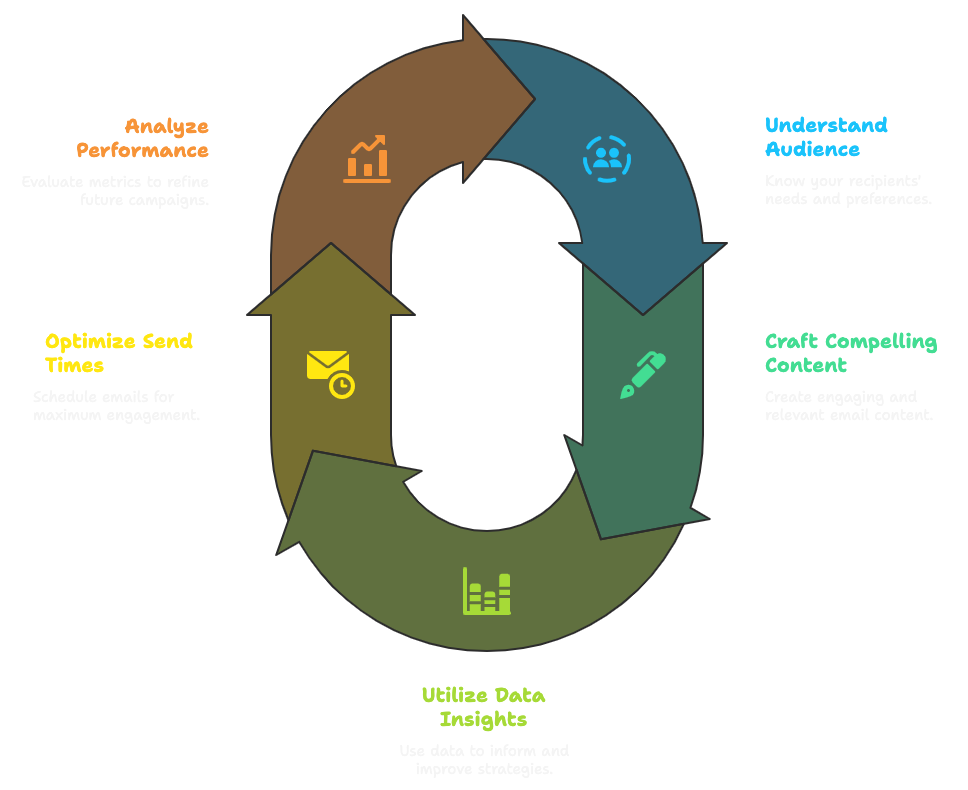
Email marketing continues to be one of the most cost-effective and impactful strategies in 2025. To create campaigns that consistently deliver results, focus on defining your goals, segmenting your audience, utilizing automation, and optimizing your efforts with data.
Remember: it’s not about sending more emails; it’s about sending the right message to the right person at the right time.
Start today by choosing a platform, building your email list, crafting compelling content, and watching your business grow.