As the internet continues to evolve, so do user expectations. By 2025, web design will go beyond just creating visually appealing websites; it will focus on crafting seamless digital experiences that are intuitive, immersive, and prioritize the user. To stand out, businesses and brands must stay updated on design innovations—not only to impress users but also to drive conversions.
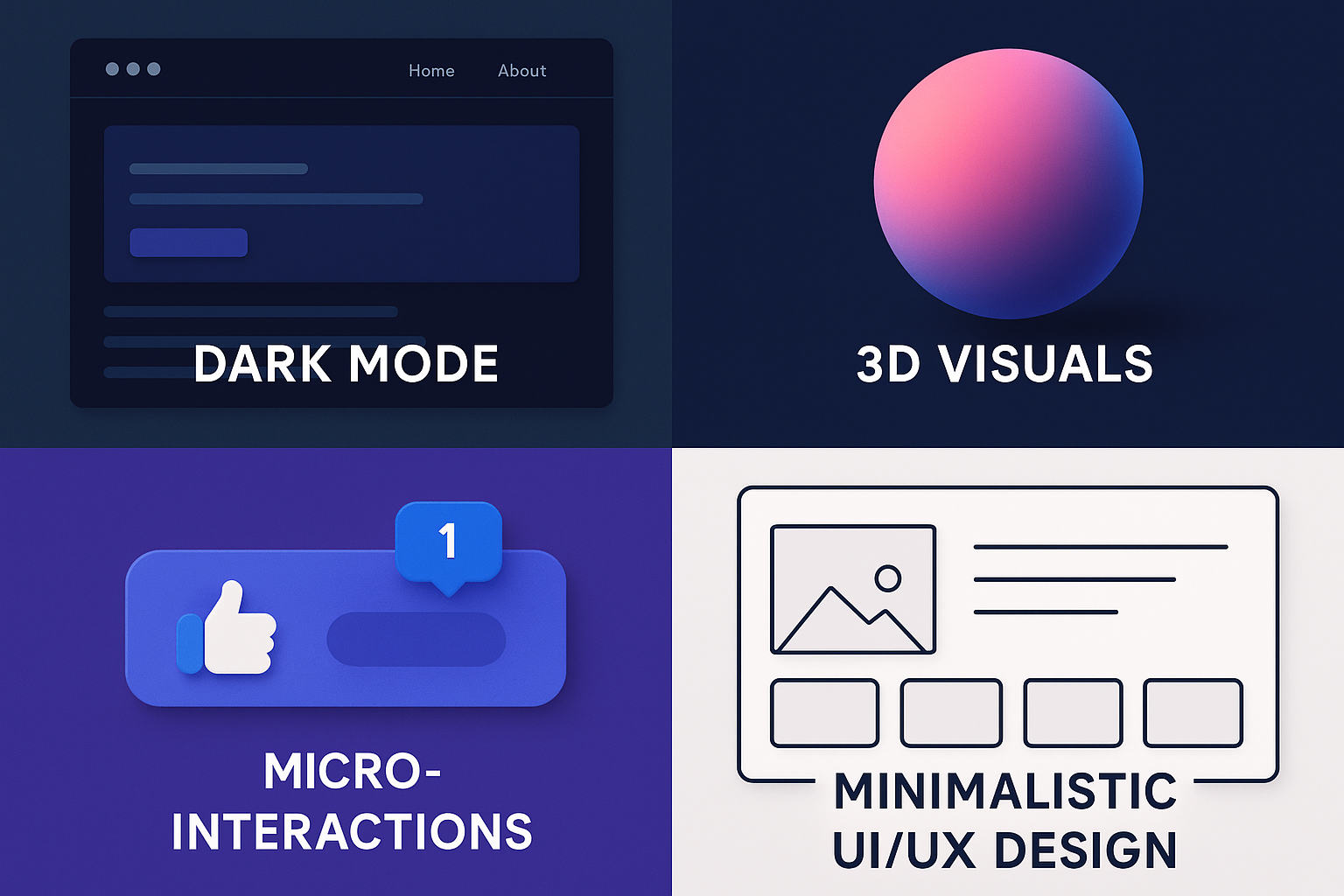
In this article, we will explore the top web design trends for 2025, including the rise of dark mode, 3D visuals, micro-interactions, and minimalistic UI/UX design, and discuss their significance in shaping the future of the digital landscape.
1. Dark Mode: Sleek, Modern, and Easy on the Eyes
Dark mode isn’t new, but in 2025, it has transitioned from a cool option to a mainstream design expectation. Originally made popular by mobile OS platforms and developer tools, dark mode is now a default or toggleable feature on many websites.
Why it’s trending:
- Reduces eye strain, especially in low-light environments
- Saves battery life on OLED and AMOLED screens
- Gives a futuristic, premium look and feel
- Pairs well with vibrant accent colors and neon/glass morphism effects
Best practices:
- Offer a light/dark toggle switch for user preference
- Ensure strong contrast ratios for readability
- Use subtle gradients and accent colors to avoid visual monotony
Industries leading the way:
- Tech startups
- SaaS platforms
- Creative portfolios
- Cryptocurrency and fintech websites
2. 3D Visuals and Interactive Elements
In 2025, websites will no longer be flat. Thanks to advances in WebGL, Three.js, and browser rendering power, 3D design is becoming more accessible and practical than ever.
From floating product previews to interactive 3D environments, web designers are using three-dimensional elements to create immersive experiences that capture attention and boost engagement.
Why it’s trending:
- Adds depth and realism to digital interfaces
- Enhances storytelling and product visualization
- Encourages longer site interaction time
- Differentiates a brand with cutting-edge aesthetics
Applications:
- 3D product configurators (furniture, fashion, cars)
- Virtual walkthroughs (real estate, hotels)
- Interactive hero sections with parallax motion
- Gamified interfaces with 3D avatars or environments
Caution:
- Must be performance-optimized — slow load times can ruin the experience
- Should not distract from usability or content
3. Micro-Interactions: The Subtle Art of Delight
One of the most user-centered trends of 2025 is the increased use of micro-interactions — small, subtle animations or responses triggered by a user action.
Animations can range from a simple button bounce when clicked to a more complex loading animation that showcases brand personality.
Why it’s trending:
- Offers immediate feedback to users
- Enhances usability by guiding actions subtly
- Adds emotion and personality to UI elements
- Improves perceived performance (even if wait times remain the same)
Examples of micro-interactions:
- Like or favorite button animations
- Animated progress bars or scroll indicators
- Hover transitions that respond to cursor movement
- Smooth menu toggles and dropdowns
- Toast notifications or alerts with motion
Key tip:
Keep it lightweight and purposeful — too many micro-interactions can overwhelm users or feel gimmicky.
4. Minimalistic UI/UX: Less Clutter, More Clarity
The mantra “less is more” continues to dominate web design in 2025. Minimalism isn’t about having less content — it’s about making content more accessible, readable, and focused.
Modern users want clarity, speed, and purposeful navigation. Clean layouts, large typography, white space, and deliberate use of color help achieve this.
Why it’s trending:
- Aligns with mobile-first and accessibility principles
- Improves user focus and reduces cognitive load
- Leads to faster loading and smoother experiences
- Works well with responsive, adaptive designs
Design elements:
- Simple navigation (hamburger menus, sticky headers)
- Flat or semi-flat design systems
- Use of negative space to guide the eye
- Purpose-driven typography and iconography
- Limited color palettes with a focus on contrast
Who should use it:
- Corporate websites
- Personal portfolios
- B2B SaaS companies
- Health and wellness platforms
5. AI-Powered Personalization
In 2025, web design is no longer static—it adapts dynamically. Powered by AI and machine learning, websites can now deliver personalized content, layouts, and visuals tailored to individual user data, behavior, and preferences. Think of it like Netflix, Amazon, or Spotify, but tailored for your brand.
Why it’s trending:
- Boosts user engagement and retention
- Improves conversions by serving tailored experiences
- Helps brands feel more attentive and human
Examples:
- Content recommendations based on browsing history
- Smart search with autocomplete suggestions
- Dynamic call-to-actions based on user segment
- Time-based greetings and visuals (e.g., “Good evening!”)
Tools driving this:
- AI design platforms like Wix ADI
- CRM-integrated personalization engines
- Behavioral analytics with AI-driven triggers
6. Glassmorphism and Frosted-Glass Effects
Glassmorphism, an evolution of neumorphism and skeuomorphism, continues to be a prominent design aesthetic in 2025. This style creates a frosted glass effect featuring semi-transparency, blurred backgrounds, and vivid layering.
It is often utilized in dark mode designs, providing a sense of depth while maintaining a minimalist approach.
Why it’s trending:
- Creates a modern, polished interface
- Combines depth and lightness
- Supports both light and dark themes beautifully
Best uses:
- Login forms
- Modals and cards
- Hero sections
- Dashboard interfaces
Glassmorphism is most effective when combined with solid UX and clean typography; otherwise, it can appear visually overwhelming.
7. Mobile-First and Thumb-Friendly Navigation
As mobile traffic continues to increase, adopting a mobile-first design has become essential for modern user experience (UX) in 2025. It’s not just about resizing content for smaller screens; designers are now prioritizing thumb-friendly navigation. This involves positioning buttons, menus, and interactive elements where users can easily reach them with their thumbs.
Why it’s trending:
- Mobile-first indexing by Google
- Most users access websites via mobile devices
- Improved accessibility and comfort
Features to watch for:
- Sticky bottom menus
- Large, tappable buttons
- Swipeable content carousels
- Simplified form fields
- Fast loading via mobile-first frameworks
8. Scrolling Effects and Scroll-Triggered Animations
Scrolling has evolved beyond merely moving down the page; it has become a storytelling tool. By 2025, scroll-triggered animations, parallax effects, and dynamic loading will create a narrative flow, making websites feel more interactive and engaging.
Popular techniques:
- Horizontal scroll galleries
- Parallax background movement
- The section reveals as you scroll
- Animated charts or counters triggered by scroll position
Important tip:
Animations should enhance content without distractions, ensuring optimal performance across all devices.
9. Modular Design Systems
A significant change in website development and management is the emergence of modular design systems. These systems can be likened to a Lego approach to design, featuring reusable and flexible components that can be rearranged across different pages and platforms.
Design frameworks such as Atomic Design, along with tools like Figma, Storybook, and Webflow, facilitate consistent and scalable web creation.
Why it’s trending:
- Speeds up design and development
- Ensures consistency across pages and apps
- Allows easier team collaboration
- Supports content editors without breaking structure
Modular design is particularly crucial for large-scale platforms, e-commerce stores, and enterprise businesses that manage numerous pages.
10. Privacy-Focused Design
As awareness of data protection increases, websites are expected to be transparent and respectful of user data. By 2025, privacy-focused UI design will significantly contribute to building trust.
How it manifests:
- Transparent cookie consent banners
- Easily accessible privacy settings
- Minimal tracking unless user-approved
- Anonymous or guest checkout options
- “Do not sell my data” toggle (especially for global audiences)
Privacy design also means being clear in language — no more dark patterns or deceptive opt-ins.
What to Expect Beyond 2025
As we move forward, expect emerging trends to be driven by:
- AI integration for design, content, and user behavior prediction
- Voice-based interfaces and accessibility-first experiences
- Sustainability in design (lightweight, energy-efficient websites)
- Augmented Reality (AR) overlays for product previews
- Headless CMS and Jamstack for faster, API-driven websites
The common thread? User-centered design with a focus on speed, inclusivity, interactivity, and innovation.
Final Thoughts: Design with Purpose, Not Just Trend
While exploring the latest web design trends can be exciting, it’s crucial to remember that these trends should serve your users and brand, not only your aesthetic.
Before jumping into dark mode or 3D design, ask:
- Will this help users navigate better?
- Does it align with my brand message?
- Is it accessible and mobile-friendly?
- Will it load fast across devices?
- Does it support my business goals?
Great web design isn’t just about following trends; it’s timeless, strategic, and centered around the user. Whether you’re a designer, a business owner, or a startup preparing to revamp your website, use these 2025 trends as inspiration to create digital experiences that are bold, beautiful, and designed to endure.